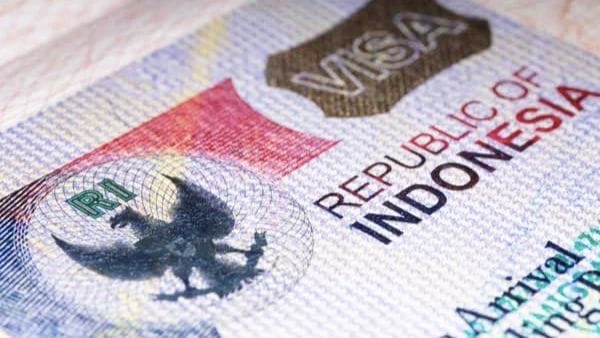
Visa on Arrival (VOA) is one of the most common entry options for travelers arriving in Bali. The process is straightforward, the fee is transparent, and it suits visitors who plan to stay up to 30 days without preparing extensive documents in advance. Many tourists, short-term expatriates, and first-time digital nomads choose VOA for its flexibility.
Although the procedure is simple, travelers should still understand the key requirements before arriving. Passport validity, payment options, and the possibility of extension can all impact the smoothness of your entry. Knowing how VOA works helps visitors avoid unnecessary queues and ensures a more efficient immigration experience at the airport.
What Is a Visa on Arrival (VOA)?
A Visa on Arrival (VOA) is an entry permit that travelers can obtain directly upon arrival at designated airports and seaports in Indonesia, including Bali’s Ngurah Rai International Airport. This visa allows visitors to stay for 30 days and can be extended once, giving a maximum total stay of up to 60 days.
VOA is intended for short-term visits such as tourism, family or social trips, and non-working business activities. Holders of this visa are not allowed to engage in paid work or any professional activity that requires a work permit.
Unlike the e-VOA, which is applied for online before departure, the VOA process is completed on-site in the arrival area. This option is often chosen by travelers who plan their trip at the last minute or prefer not to handle visa paperwork in advance.
Eligible Countries
A Visa on Arrival (VOA) can only be issued to travelers holding passports from countries that are officially approved by the Directorate General of Immigration of the Republic of Indonesia. As of the latest update, 97 countries are eligible to obtain a VOA upon arrival in Indonesia, including at Bali’s Ngurah Rai International Airport.
The list covers most of the major tourism markets for Bali, including Australia, the United States, countries across Europe, Japan, South Korea, and numerous nations in Southeast Asia, the Middle East, and other regions. According to the official list, the eligible countries are:
South Africa, Albania, United States, Andorra, Saudi Arabia, Argentina, Armenia, Australia, Austria, Azerbaijan, Bahrain, Netherlands, Belarus, Belgium, Brazil, Brunei Darussalam, Bosnia Herzegovina, Bulgaria, Czech Republic, Chile, Denmark, Ecuador, Estonia, Philippines, Finland, Guatemala, Hong Kong, Hungary, India, United Kingdom, Ireland, Italy, Iceland, Japan, Germany, Cambodia, Canada, Kazakhstan, Kenya, Colombia, South Korea, Croatia, Kuwait, Laos, Latvia, Liechtenstein, Lithuania, Luxembourg, Maldives, Malaysia, Malta, Morocco, Mauritius, Mexico, Egypt, Monaco, Mongolia, Mozambique, Myanmar, Norway, Oman, Palestine, Papua New Guinea, France, Peru, Poland, Portugal, Qatar, Romania, Russia, Rwanda, New Zealand, Serbia, Seychelles, Singapore, Cyprus, Slovakia, Slovenia, Spain, Suriname, Sweden, Switzerland, Taiwan, Tanzania, Thailand, Timor Leste, China, Tunisia, Turkey, United Arab Emirates, Uzbekistan, Ukraine, Vatican City, Venezuela, Vietnam, Jordan, Greece.
With such broad coverage, most international visitors can enter Bali using a VOA without the need for a more complex visa. However, because immigration regulations may change, travelers are strongly advised to check the latest official information before departure.
Visa on Arrival (VOA) Requirements

To obtain a Visa on Arrival upon entering Bali, travelers must meet the basic requirements set by Indonesia’s immigration authorities. These rules apply to all passport holders from countries eligible for VOA.
The main requirements include:
- Passport valid for at least 6 months
Your passport must have a minimum validity of six months from the date of arrival in Indonesia. - Proof of onward travel
Travelers must present a return ticket or a ticket showing onward travel to another country. - Proof of accommodation
Immigration officers may request confirmation of where you will stay during your visit, such as a hotel booking, villa reservation, or address of temporary lodging. - Payment of the VOA fee
The visa fee is paid upon arrival, using cash or card depending on the availability of payment systems on that day. - No previous immigration violations
Entry may be denied if the traveler has a record of past immigration issues or security concerns.
These requirements are straightforward, but ensuring that all documents are prepared in advance will help travelers avoid delays at the airport or potential entry denial.
How to Obtain a VOA at Bali’s Ngurah Rai Airport
The process for obtaining a Visa on Arrival at I Gusti Ngurah Rai International Airport is straightforward and designed to help travelers enter Indonesia efficiently. Here are the typical steps in the international arrival area:
- Follow the “Visa on Arrival” lane
After disembarking, follow the signs toward immigration. You will find a dedicated lane for VOA applicants. - Pay the VOA fee
Before proceeding to the immigration counters, travelers must pay the VOA fee at the official payment desk.
Payment can usually be made in cash (IDR or select foreign currencies) or by debit/credit card, depending on the availability of payment systems at the time. - Receive the payment receipt
The officer will provide a receipt, which must be kept and presented during the immigration check. - Proceed to the immigration counter
Submit your passport, boarding pass, and VOA payment receipt. The officer will conduct a brief check, stamp your passport, and activate your 30-day stay permit. - Continue to the baggage claim area
Once the immigration process is complete, you can proceed to collect your luggage.
Estimated processing time:
VOA processing typically takes between 10 and 30 minutes, depending on passenger volume and time of arrival. During peak travel seasons, queues may be longer, so preparing your documents in advance will help speed up the process.
Alternative Option: e-VOA (Online Before Arrival)
In addition to obtaining a VOA at the airport, travelers can choose the e-VOA, an online version of the Visa on Arrival that can be applied for before departing for Indonesia. This option is provided by the Directorate General of Immigration and is increasingly popular among visitors who want a faster arrival process.
The main advantage of the e-VOA is the ability to reduce waiting time at the airport, as payment and approval are completed beforehand. For travelers arriving during busy hours or peak holiday seasons, the e-VOA offers a smoother and more efficient entry experience.
The e-VOA has the same validity as the regular VOA, a 30-day stay, extendable once for a total of up to 60 days.
Extending a Visa on Arrival (VOA)
A Visa on Arrival allows visitors to stay in Indonesia for 30 days, but it can be extended once for an additional 30 days, giving a maximum total stay of 60 days. This extension is commonly used by travelers who wish to prolong their holiday, work remotely for a short period, or simply need more time in Bali without leaving the country.
Key points about extending a VOA:
- Processed at a local immigration office
Extensions must be completed at a nearby immigration office, such as the Denpasar, Ngurah Rai, or Singaraja offices. - The process involves several steps
Typically, the procedure includes:- Submitting the application and documents
- Completing photo and biometric capture
- Collecting the passport after the extension is approved
- Processing time
The extension usually takes 3–7 working days, depending on the number of applicants and office workload. - Use of visa agents is allowed
Many travelers choose to work with visa agents for convenience, although applicants are still required to appear in person for photos and biometrics. - Only one extension is permitted
After reaching the 60-day maximum duration, travelers must leave Indonesia or apply for a different type of visa.
It is recommended to start the extension process at least one week before the initial 30-day stay expires to avoid any risk of overstay penalties.
Restrictions & What Is Not Allowed
Although the Visa on Arrival offers flexibility for stays of up to 60 days, there are several important limitations that travelers must be aware of to avoid violating Indonesian immigration rules.
Activities not allowed under a VOA:
- No work or paid activities
VOA holders are not permitted to work in Indonesia, including freelance jobs, remote work for local clients, or any professional activity that generates income within the country. - Not suitable for long-term stays
The VOA is designed for short visits. Travelers wishing to stay longer must apply for a different visa type, such as a long-stay visit visa or a temporary stay permit (ITAS/KITAS). - Cannot be converted to another visa type
A VOA cannot be converted directly into another visa or residence permit without leaving Indonesia first. - Single-entry only
The VOA is valid for one entry. If the traveler leaves Indonesia, the visa becomes invalid and a new VOA must be obtained upon re-entry. - Overstay penalties apply
Staying beyond the permitted period results in daily fines, and more serious violations may lead to deportation.
Understanding these restrictions helps travelers plan their stay more responsibly and avoid immigration issues during their visit.
Frequently Asked Questions (FAQ)
1. Is the VOA a multiple-entry visa?
No. The Visa on Arrival is single entry. If you leave Indonesia, the visa becomes invalid and you must obtain a new one upon re-entry.
2. Do children need a VOA as well?
Yes. All travelers, including infants and children, must have the appropriate visa based on their nationality.
3. Is the VOA available at all airports in Indonesia?
No. The VOA is available at designated international airports and seaports. Bali’s Ngurah Rai International Airport is one of the main entry points offering this service.
4. If I already have an e-VOA, do I still need to queue?
An e-VOA generally speeds up the process because payment is completed in advance, but travelers must still go through standard immigration checks.
5. What if my travel schedule changes?
For e-VOA holders, arrival date flexibility is usually allowed as long as the visa is still valid. For VOA obtained on arrival, a schedule change does not affect the process since the visa is issued upon entry.
6. What happens if I overstay?
Overstaying results in daily fines as set by immigration regulations, and more serious violations may lead to deportation.
Conclusion
The Visa on Arrival (VOA) remains one of the most practical entry options for travelers visiting Bali for a short stay. With a simple application process, flexible stay of up to 60 days, and availability to a wide range of nationalities, the VOA offers convenience for tourists, short-term expatriates, and first-time digital nomads arriving in Indonesia.
However, understanding the procedures, limitations, and extension options is essential to ensure a smooth and hassle-free visit. With proper document preparation and compliance with immigration rules, travelers can enjoy their holiday or remote-work stay in Bali with confidence.
Official Source:
Directorate General of Immigration (imigrasi.go.id)