
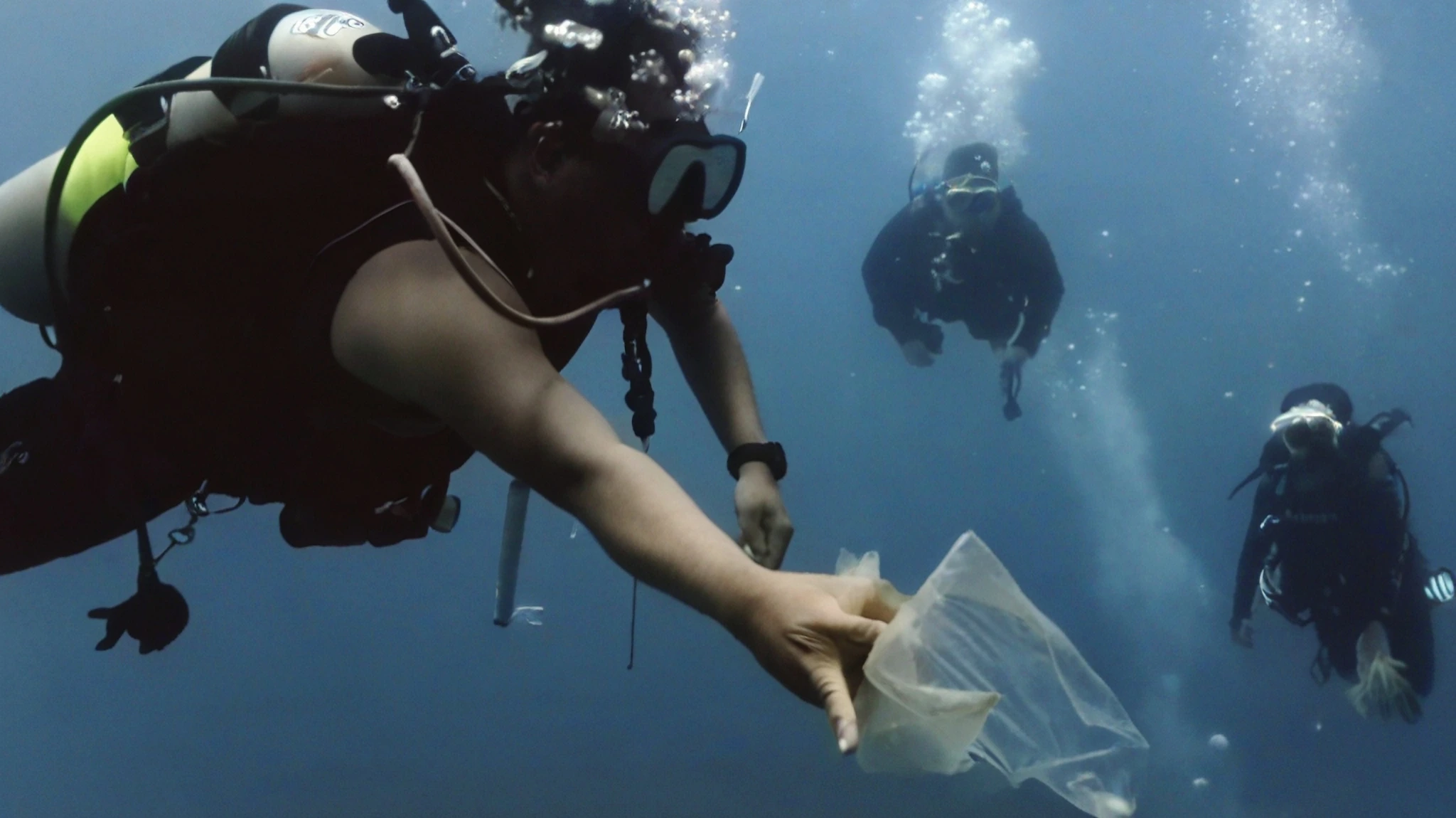
KLUNGKUNG, DEWATA.NEWS – Plastic waste has been observed floating in the waters of Manta Point, Nusa Penida, one of Bali’s most popular marine tourism and diving sites, raising renewed concerns about ocean pollution and its impact on marine ecosystems.
The issue was highlighted by Punto Dewa, a professional diver and dive instructor, who documented his recent dive at Manta Point on Wednesday, December 10, 2025. The footage, later shared on his personal social media account, showed clusters of plastic waste drifting near the surface during a dive session.
“The video was taken last week. Manta Point is relatively shallow, only about 12 meters deep. The trash was mostly at the surface, around zero to five or seven meters,” Punto explained. “I made a similar video last year at the same spot, and there was also a lot of trash.”
According to Punto, the presence of marine debris in the area is not a new phenomenon. Having dived regularly in Nusa Penida over the past two years, he noted that plastic waste tends to appear more frequently during the rainy season, shifting locations depending on ocean currents.
“When it rains, trash usually shows up, though not at every dive site. At Manta Point, there is a manta ray cleaning station where the waste often accumulates, but it moves around,” he said.
Plastic waste has also been found at several other dive sites around Nusa Penida. Punto believes much of the debris originates from land and is carried into the sea by water flows.
In response, the dive organization he works with regularly conducts underwater clean-up activities, once collecting up to 50 kilograms of waste in a single operation.
Despite ongoing clean-up efforts, Punto admitted he remains skeptical about relying solely on official responses. Outside of organized programs, he often collects plastic waste he encounters during daily dives.
The condition of Manta Point has prompted questions from tourists using his services as a dive instructor. However, Punto said most visitors continue diving and tend to view the issue as part of a broader global problem.
Most of the debris consists of single-use plastics, including food packaging, coffee sachets, plastic bags, as well as raffia strings and discarded fishing nets that can entangle marine life. Of particular concern is the risk to manta rays, which feed by filtering plankton from the water.
“Manta rays don’t have teeth. They feed on plankton by swimming with their mouths open,” Punto said. “There’s a risk they ingest microplastics from broken-down plastic waste.”
He recalled an incident where a sea turtle was found entangled in synthetic rope, believed to be leftover fishing material caught on coral reefs. Punto hopes waste management improvements upstream can help restore coral reef conditions in the long term.
The situation was confirmed by Dewa Ketut Widana, Head of the Bali Marine Conservation Area Management Unit (UPTD Kawasan Konservasi Perairan Bali).
He said plastic waste at Manta Point typically increases in December during the rainy season and does not originate solely from Bali.
“The trash usually comes from various regions and arrives during the rainy season, especially in December. Our response has been to conduct clean-up patrols as follow-up action,” Widana stated.