
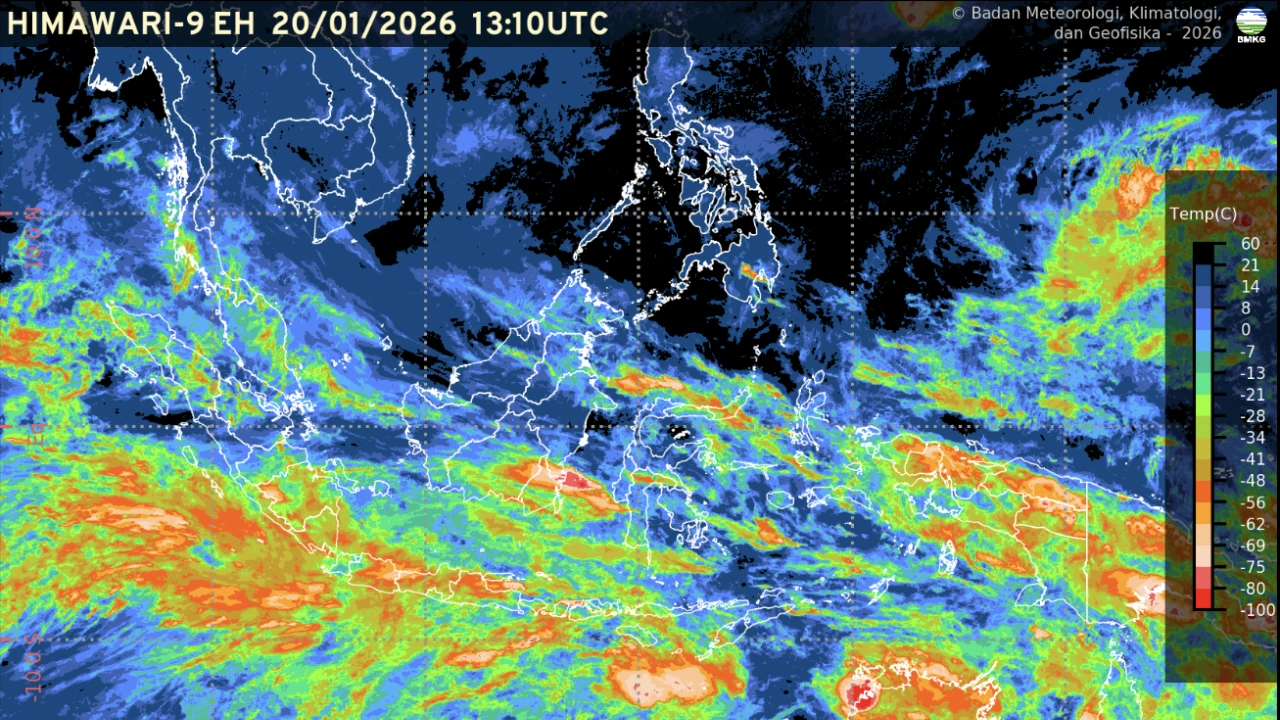
DENPASAR, DEWATA.NEWS – Indonesia’s Meteorology, Climatology, and Geophysics Agency (BMKG) has urged residents and visitors in Bali to remain alert as the risk of extreme weather is expected to increase toward the end of January 2026.
BMKG’s latest atmospheric analysis indicates a rise in rainfall intensity across southern Indonesia, including Bali, driven by a combination of large-scale and regional weather systems. These conditions may elevate the risk of flooding, landslides, and disruptions to land, sea, and air transportation.
BMKG Head Teuku Faisal Fathani said current atmospheric disturbances are significantly enhancing convective cloud formation.
“We advise the public to stay calm but increase vigilance as extreme weather potential rises toward the end of January. By maintaining preparedness and continuously monitoring official BMKG updates, risks can be minimized,” he said in a statement on Tuesday, January 20.
For Bali, BMKG forecasts the potential for heavy rainfall accompanied by lightning and strong winds on January 21–22, with elevated rainfall intensity likely to continue on January 25–26. These conditions may affect daily activities, tourism operations, and inter-island crossings, particularly during periods of strong winds and rough seas.
Acting Deputy for Meteorology at BMKG Andri Ramdhani explained that several technical factors are influencing weather conditions this week. These include the presence of Tropical Cyclone Seed 97S in the southern Indian Ocean, strengthening Asian monsoon winds accompanied by a cold surge, and active atmospheric waves such as the Madden–Julian Oscillation (MJO), equatorial Rossby, and Kelvin waves.
“The westward movement of system 97S can intensify wind convergence from western Sumatra through Bali to Nusa Tenggara, supporting increased rain cloud formation over southern Indonesia,” Andri said.
High humidity in the lower to middle atmosphere and unstable atmospheric conditions are further supporting localized convective activity over Bali. BMKG noted that weather patterns remain dynamic and may change rapidly.
Residents, tourists, and stakeholders in Bali are advised to exercise caution when planning outdoor activities and travel, including road trips, sea crossings, and flights. Fishermen and marine operators are also urged to monitor sea conditions closely.
BMKG encourages the public to follow regular updates via BMKG official website, and verified social media channels to stay informed of the latest weather developments.