
DENPASAR, DEWATA.NEWS – The Bali Provincial Government is accelerating the adoption of electric vehicles (EVs) as part of its clean energy transition and efforts to strengthen sustainable tourism, with areas from Ubud to Nusa Penida designated as pilot zones for EV-only or EV-priority use.
The policy was outlined by Wayan Koster, who said the initiative aligns with Bali’s vision to become a national pioneer in the green economy while improving the quality and sustainability of its tourism sector.
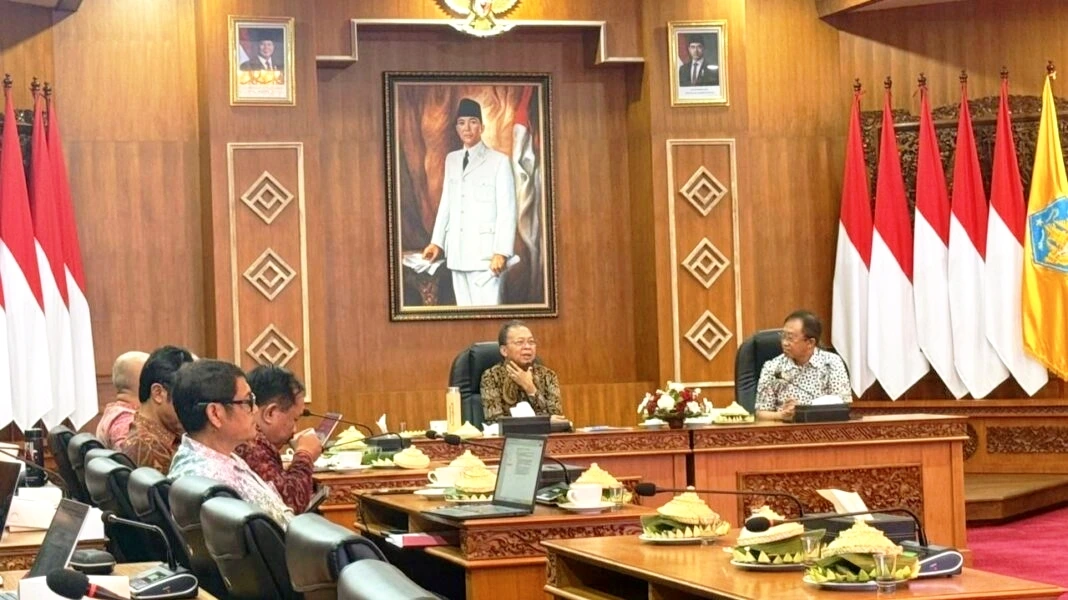
The plan was discussed during a coordination meeting on the acceleration of EV usage held on Saturday, January 24, 2026, at the Governor’s Office in Jayasabha. The meeting involved provincial officials and representatives from PLN, including its Director of Retail and Commerce, Adi Priyanto.
According to Governor Koster, electric vehicles offer higher energy efficiency, lower operating costs, quieter operation, and zero tailpipe emissions. These characteristics, he said, are consistent with Bali’s development vision of Nangun Sat Kerthi Loka Bali, which emphasizes environmental harmony and community well-being.
“This plan has been in place for some time but was delayed by the COVID-19 pandemic,” Koster said. “Now that economic conditions have improved, the electric vehicle program can move forward as part of our commitment to protecting Bali’s environment and supporting sustainable livelihoods.”
The provincial government is targeting Bali to become a pioneer in the electric vehicle industry by encouraging the transition among civil servants, businesses, and the wider public. Initial zoning is planned for key tourism areas including Ubud, Sanur, Kuta, Nusa Dua, and Nusa Penida, with Nusa Penida envisioned as a future “green island.” Local authorities in Klungkung Regency have expressed readiness to support the initiative.
To support the rollout, Koster stressed the need for adequate public charging infrastructure, ongoing public outreach, and community involvement. He also called for promotional events involving government agencies, businesses, and EV users to build awareness and acceptance.
“Electric vehicles are more economical for daily use. There is no fuel cost, no oil changes, and maintenance is lighter,” he said.
PLN’s Adi Priyanto echoed these points, noting that EV users benefit from lower daily operating costs, simpler maintenance, quiet operation, and emission-free driving. He confirmed that PLN is prepared to ensure reliable electricity supply to support EV adoption across industrial, commercial, and residential sectors.
PLN has integrated EV infrastructure planning into its national electricity development and corporate plans, including the expansion of public charging stations. Priyanto said PLN will continue to scale up charging infrastructure through digital services integrated into the PLN Mobile application, offering features such as charging station location searches, transparent queue reservations, and a 24-hour charging hotline.
PLN is also supporting EV adoption through discount programs for home charging services and incentives for charging infrastructure providers. As EV ownership in Bali continues to grow, home charging currently accounts for the majority of electricity consumption, while public charging stations play a key role in supporting tourism mobility and longer-distance travel.
Priyanto noted that the number of electric cars in Indonesia has grown by an average of 2.5 times annually over the past three years, reaching approximately 175,000 units by 2025. This growth has been driven by government incentives, increasing model availability, and more competitive pricing.
In Bali, EV energy consumption is dominated by home charging at around 55 percent, with public charging stations accounting for the remaining 45 percent. “Balancing the development of both systems is essential for the long-term sustainability of Bali’s electric vehicle ecosystem,” Priyanto concluded.