
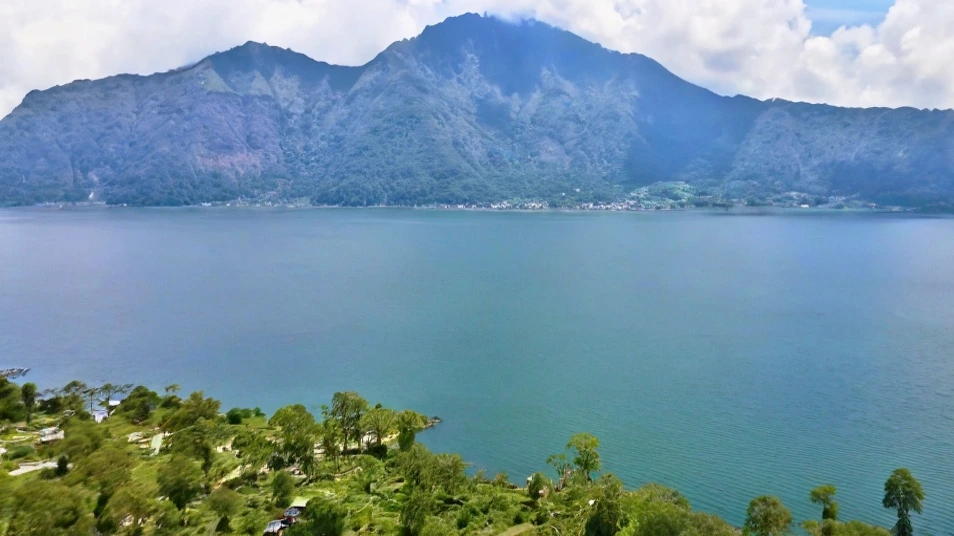
BANGLI, DEWATA.NEWS – The population of invasive Red Devil fish is estimated to have taken over 70 to 80 percent of Lake Batur in Kintamani, raising concerns over the survival of native fish species in the area.
In response, the Bangli Regency Agriculture, Food Security and Fisheries Office has scheduled a control operation on Friday (13/2) to reduce the population of the invasive species.
The action will focus on waters around Abang Batudinding Village and Terunyan Village and will involve local fishermen and community members.
Head of the Fisheries Division at the Bangli Agriculture, Food Security and Fisheries Office, I Wayan Agus Wirawan, said the agency has coordinated with a Fish Processing Unit (UPI) in Pengambengan, Negara. Under the agreement, all Red Devil catches from the operation will be purchased and processed into fish meal.
“The system is that the fish will be bought there,” he said on Wednesday (11/2).
The initial operation is targeting a catch of between 3 and 4 tons. However, due to current rainy weather conditions, the expected catch may range between 1 and 2 tons.
Agus Wirawan emphasized that control measures must be carried out continuously, as the dominance of Red Devil fish has increasingly threatened local fish populations in Lake Batur. The office is encouraging active participation from fishermen and residents to help reduce the invasive species.
He expressed hope that Friday’s operation will serve as a starting point for independent community-led efforts in the future. With a clear distribution channel to the fish processing plant in Negara, local fishermen are expected to establish direct partnerships with the processing industry.
“We are facilitating the initial process and opening the pathway. We hope that in the future the community can independently cooperate with the Fish Processing Unit in Negara,” he said.
Lake Batur, one of Bali’s major freshwater lakes and a key resource for local fisheries, has faced growing ecological pressure from the rapid spread of non-native species. Authorities say sustained intervention will be needed to protect the lake’s biodiversity and support the livelihoods of communities that depend on it.