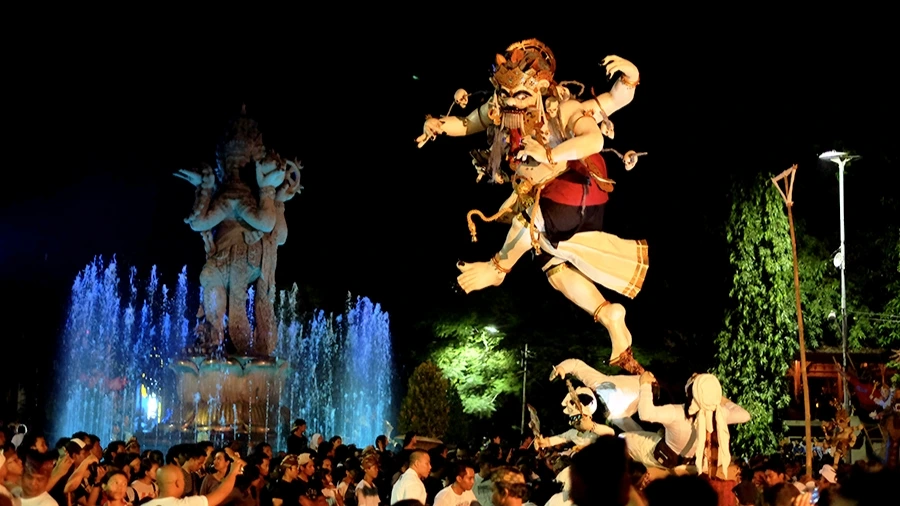
On the eve of Nyepi, Bali’s Day of Silence, the atmosphere across the island becomes dramatically different from an ordinary night. Village streets fill with crowds, the powerful rhythms of baleganjur gamelan echo through neighborhoods, and towering giant effigies are carried through the main roads. This is the night of Pengerupukan, an important tradition held one day before Nyepi.
These giant effigies are known as ogoh-ogoh, artistic creations built by youth groups in each banjar, or traditional community organization. Their forms often depict frightening mythical creatures, demons from Balinese folklore, or symbolic figures representing negative forces within the world.
During the Pengerupukan procession, ogoh-ogoh are paraded through villages accompanied by music, cheers, and large gatherings of local residents. The event is not merely a public spectacle or artistic performance. Behind the vibrant atmosphere lies a deeper spiritual meaning connected to the ritual purification of the environment before Nyepi, the sacred day when the entire island of Bali observes complete silence.
Today, the ogoh-ogoh parade has become one of the most recognizable cultural traditions in Bali. Each year, thousands of residents and visitors gather across the island to witness these giant effigies, making Pengerupukan night one of the most vibrant moments in the sequence of Nyepi celebrations.
What Is Pengerupukan?
Pengerupukan is a series of rituals held one day before Nyepi, the Balinese Day of Silence in the Saka calendar. This day marks the final stage in the process of spiritual purification before Balinese Hindus enter Nyepi, a sacred day dedicated to silence, reflection, and self-restraint.
During Pengerupukan, various ceremonies are performed to neutralize and balance negative energies believed to disrupt harmony between nature, humans, and the spiritual world. One of the most important rituals conducted on this day is Tawur Kesanga, a ceremonial offering intended to appease bhuta kala, the chaotic forces of nature that must be brought back into balance.
In addition to larger ceremonies held at temples or village centers, many families also carry out smaller rituals around their homes. This tradition, often referred to as pengrupukan, involves walking around the house while carrying fire, torches, or making loud noises to symbolically drive away negative influences.
The evening of Pengerupukan then becomes the most visible part of the celebration. This is when ogoh-ogoh are paraded through villages and streets, representing the manifestation of bhuta kala. The procession symbolizes the removal and purification of these negative forces before Bali enters the sacred stillness of Nyepi.
What Is Ogoh-Ogoh?
Ogoh-ogoh are giant effigies created as part of the Pengerupukan tradition, held on the night before Nyepi, the Balinese Day of Silence. These large statues are typically paraded through village streets by youth groups from the local banjar, symbolizing bhuta kala, the negative or chaotic forces recognized in Balinese Hindu belief.

Visually, ogoh-ogoh are often designed as frightening figures with dramatic facial expressions, oversized bodies, and aggressive poses. Many are inspired by characters from Hindu mythology, Balinese folklore, or symbolic figures representing negative human traits such as greed, anger, or arrogance.
Despite their intimidating appearance, ogoh-ogoh carry a deeper philosophical meaning. The effigies represent negative energies that must be controlled and purified before the arrival of Nyepi, when the entire island of Bali observes a day of silence and reflection intended to restore spiritual and natural balance.
Today, ogoh-ogoh are not only part of a religious ritual but also a form of community art. Each banjar typically builds its own ogoh-ogoh with unique designs, turning the process into a collaborative cultural activity that showcases the creativity and teamwork of Bali’s younger generation.
The History of the Ogoh-Ogoh Tradition in Bali
Although ogoh-ogoh are now closely associated with the Nyepi celebrations, the tradition itself is not as ancient as many other Balinese Hindu rituals. The practice of creating and parading these giant effigies began to grow widely in Bali around the 1980s, driven largely by the creativity of youth communities within local banjar organizations.
Before ogoh-ogoh became popular, Pengerupukan rituals were primarily focused on religious ceremonies such as Tawur Kesanga and the traditional pengrupukan ritual performed around homes to symbolically drive away negative influences. The creation of giant effigies representing bhuta kala later emerged as a form of artistic expression that complemented the spiritual meaning of the ritual.
Over time, ogoh-ogoh evolved into one of the most anticipated elements of the Nyepi celebrations. Today, almost every banjar in Bali creates its own ogoh-ogoh, with designs that have become increasingly elaborate and artistic from year to year.
Today, the ogoh-ogoh tradition holds not only religious significance but also an important place in Bali’s social and cultural life. The process of building these effigies involves strong community cooperation, artistic creativity, and a spirit of collective participation among the youth of each village.
The Process of Making Ogoh-Ogoh
The creation of an ogoh-ogoh usually begins several weeks before Nyepi. In many villages across Bali, youth groups from the local banjar gather to discuss the concept and design of the effigy they will build for the Pengerupukan parade. The process involves teamwork, creativity, and strong community participation.
In general, the making of an ogoh-ogoh follows several main stages:
- Concept and Design Planning
The process begins with discussions within the banjar to determine the concept of the ogoh-ogoh. The design may be inspired by characters from Hindu mythology, Balinese folklore, or symbolic figures representing negative human traits. - Building the Main Frame
After the design is finalized, builders create the main structural frame using bamboo or other lightweight materials. This frame serves as the core structure that supports the entire effigy. - Shaping the Body and Face
The next step is forming the body, facial features, and overall figure of the ogoh-ogoh using materials such as papier-mâché, foam, cloth, or other sculpting materials. - Painting and Adding Details
Once the basic shape is completed, the effigy is painted and decorated. Artists add dramatic facial expressions, clothing, accessories, and other ornamental details to give the figure a striking and lifelike appearance. - Mounting on the Carrying Platform
The final stage involves attaching the ogoh-ogoh to a bamboo or wooden platform. This structure allows the effigy to be lifted and carried by groups of people during the Pengerupukan procession.
Through this process, building an ogoh-ogoh becomes more than just an artistic activity. It also strengthens community bonds and encourages collaboration among members of each banjar.
Ogoh-Ogoh Parades on Pengerupukan Night
Ogoh-ogoh parades usually take place on the evening of Pengerupukan, one day before Nyepi. After sunset, communities begin gathering along village streets to witness the procession, which has become one of the most vibrant moments in the series of Nyepi celebrations.
The ogoh-ogoh that have been carefully built in the weeks leading up to the event are lifted and carried by groups of young men from the local banjar. Each effigy is mounted on a bamboo or wooden platform so that it can be carried together by many people as it moves through the village.
Throughout the procession, the parade is typically accompanied by baleganjur, a dynamic form of Balinese gamelan music played with energetic rhythms. The powerful sound of the instruments creates an intense atmosphere that is traditionally believed to help drive away negative energies.
In some parts of the procession, the ogoh-ogoh are spun or shaken, especially when they reach road intersections. Symbolically, this act is believed to confuse or expel bhuta kala, preventing these negative forces from returning to disturb human life.
The ogoh-ogoh parade often attracts large crowds, including visitors who come to observe this unique cultural tradition. Despite its lively and festive atmosphere, the procession remains closely connected to its spiritual purpose: cleansing the environment before Bali enters the sacred silence of Nyepi.
Why Are Ogoh-Ogoh Burned?
After the parade concludes, many ogoh-ogoh are traditionally burned as part of the closing ritual of Pengerupukan. This burning carries a symbolic meaning connected to the destruction of the negative energies represented by the effigies.
In Balinese Hindu philosophy, ogoh-ogoh represent bhuta kala, the chaotic forces of nature that can disturb the balance of life. By burning the effigies, the community symbolically demonstrates that these negative energies have been purified or returned to the natural elements.
The burning of ogoh-ogoh also marks the end of the lively atmosphere of Pengerupukan night. Afterward, communities begin preparing for Nyepi, when the entire island of Bali observes 24 hours of silence, reflection, and spiritual purification.
In recent years, however, not all ogoh-ogoh are burned. In some areas, the effigies are preserved, displayed, or entered into ogoh-ogoh competitions organized by local communities or regional governments.
Despite these variations in practice, the core meaning of the tradition remains the same: a symbolic act of cleansing and restoring balance before the sacred day of Nyepi begins.
The Role of Banjar and Youth in the Ogoh-Ogoh Tradition
The ogoh-ogoh tradition is closely connected to the role of the banjar, the traditional community organization that forms the center of social life in many Balinese villages. The banjar functions as a community structure where residents collaborate on various activities, including preparations for the Nyepi celebrations.
Most ogoh-ogoh are built by youth groups within the banjar, commonly known as sekaa teruna. These groups usually begin planning and constructing the effigies several weeks before the night of Pengerupukan.
The building process is typically carried out through collective effort at the community hall or gathering spaces within the village. Members of the community contribute in different ways, from designing the concept and constructing the frame to painting and decorating the final figure.
Beyond its role in religious observances, the activity also serves as an important platform for young people to develop teamwork, artistic creativity, and stronger social bonds within the community.
Through the ogoh-ogoh tradition, values of cooperation, solidarity, and Balinese cultural identity continue to be passed down from one generation to the next.
Ogoh-Ogoh and Tourism in Bali
In recent decades, the ogoh-ogoh tradition has also become one of the cultural attractions that draws the attention of visitors traveling to Bali. Pengerupukan night is often a highly anticipated moment for many tourists who want to witness the lively parade of giant effigies in villages and towns across the island.
For visitors, ogoh-ogoh offer a unique cultural experience that combines art, ritual, and community participation in a public celebration. However, it is important to understand that this tradition remains part of the religious rituals leading up to Nyepi.
Several factors make ogoh-ogoh particularly interesting for tourists:
- Spectacular Giant Effigy Parades
Ogoh-ogoh are often built on a large scale with highly detailed designs. Their dramatic shapes and expressive figures make them visually striking for spectators. - A Lively Nighttime Atmosphere
The parades are usually accompanied by energetic baleganjur gamelan music, enthusiastic crowds, and busy village streets that create a vibrant and festive environment. - Creative Community Art
Each banjar typically creates its own ogoh-ogoh with a unique concept and design. This makes the parades a showcase of artistic creativity across different communities in Bali. - An Opportunity to Experience Balinese Culture Firsthand
Watching ogoh-ogoh allows visitors to observe how local traditions are practiced within Balinese society, including the strong sense of community and spiritual values behind the celebration.
Although increasingly popular among tourists, the Balinese community continues to preserve the spiritual meaning of the ogoh-ogoh tradition as part of the purification process before the arrival of Nyepi.
Things Visitors Should Know When Watching Ogoh-Ogoh
For visitors who plan to watch the ogoh-ogoh parades on Pengerupukan night, there are several important things to keep in mind to ensure a comfortable experience while respecting local traditions.
- Road Closures and Traffic Diversions
On Pengerupukan night, many streets in villages and urban areas may be temporarily closed to allow space for the ogoh-ogoh processions. Visitors should plan their travel earlier than usual, as traffic can become very congested. - Large Crowds Are Common
Ogoh-ogoh parades often attract large crowds of both local residents and visitors. Arriving early is recommended if you want to secure a good viewing spot. - Follow Instructions from Pecalang
Pecalang are traditional community security officers responsible for maintaining order during the event. Visitors are expected to follow their instructions to ensure the procession runs smoothly. - Respect the Cultural and Religious Context
Although the atmosphere can be festive, ogoh-ogoh parades remain part of the religious rituals leading up to Nyepi. Visitors are encouraged to behave respectfully throughout the event. - Prepare for Nyepi the Following Day
After Pengerupukan night, Bali enters Nyepi. During this day, the airport, seaports, roads, and most public activities across the island stop for 24 hours. Visitors should prepare their necessities in advance.
The Cultural Meaning Behind Ogoh-Ogoh
The ogoh-ogoh tradition has become one of the most recognizable cultural events in Bali, marking the eve of Nyepi with vibrant parades and striking artistic creations. Behind the dramatic figures and lively atmosphere lies a deeper spiritual meaning connected to purification and the restoration of balance before the island enters a day of complete silence.
Through the creation and procession of ogoh-ogoh, Balinese communities express both their artistic creativity and their commitment to cultural traditions. The involvement of youth groups, community cooperation within the banjar, and the symbolic rituals performed during Pengerupukan all reflect the strong cultural values that continue to shape life in Bali.
For visitors, witnessing the ogoh-ogoh parade offers a rare opportunity to experience an important cultural tradition firsthand. At the same time, the event serves as a reminder that the celebration is closely tied to religious beliefs and the spiritual preparations leading into Nyepi.
As Bali prepares for the quiet reflection of Nyepi, the night of ogoh-ogoh stands as a powerful expression of culture, community, and spiritual meaning that has become an enduring part of the island’s identity.