
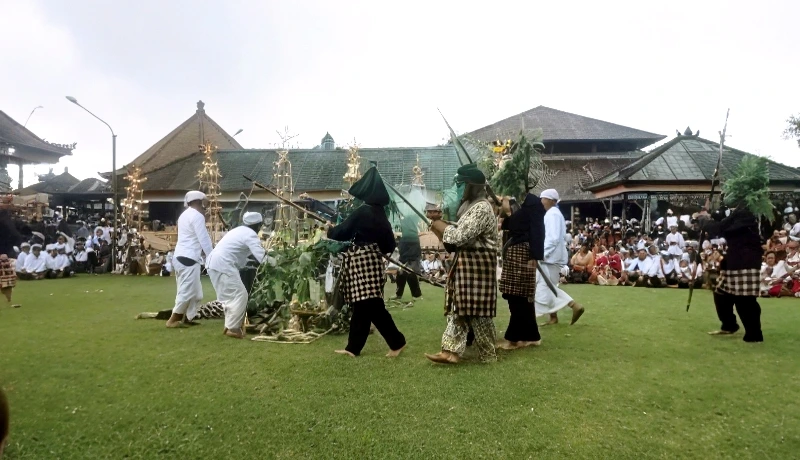
TABANAN, DEWATA.NEWS – The Tabanan Cultural Office has proposed the Baris Duwe dance from Mayungan Traditional Village, Antapan, Baturiti, to be recognized as an Intangible Cultural Heritage (WBTB), with submission targeted for 2027.
The proposal is currently in the research phase, with the Cultural Heritage and History team conducting field surveys, documentation, and assessments covering historical background, cultural function, and performance structure that continues to be preserved by the local community.
Head of Cultural Heritage and History at the Tabanan Cultural Office, I Nyoman Hartanegara, said the process requires thorough study before formal submission.
“All stages must be completed, including field research to strengthen the documentation and assessment,” he said on Monday (April 6).
Baris Duwe is a sacred dance performed exclusively during Dewa Yadnya ceremonies at temples. It is believed to serve as a spiritual protector for the Mayungan community against both physical and non-physical threats.
The symbolism is reflected in the dancers’ attributes, which include spears and wooden rifles. The rifles used are not functional weapons but sacred wooden objects.
Traditional village leader I Nyoman Gunarsa explained that the dance was originally performed by 12 selected individuals from specific lineages, who must undergo a spiritual process before participating.
“If there are no eligible descendants, the number of dancers may be fewer, but they must still receive spiritual guidance,” he said.
The community has also emphasized that the heritage proposal should not alter the sacred values and traditions of the dance.
“We hope that even if it is recognized as cultural heritage, its sacred nature remains preserved and unchanged,” Gunarsa added.
The dance consists of two main forms: Baris Tombak (spear) and Baris Bedil (rifle). Performances are limited to three temples, Pura Pucak Banua, Pura Pucak Peninjauan, and Pura Bale Agung, where the sacred objects are also kept.
Historically, the dance is believed to date back to the 11th century based on inscriptions. Baris Tombak is associated with the Majapahit era, while Baris Bedil is linked to the Dutch colonial period.
Due to its sacred nature, performances are relatively brief and follow strict customary rules. Dancers are subject to specific restrictions, including dietary rules and behavioral taboos.
Authorities believe Baris Duwe meets the criteria for intangible cultural heritage status, with the full evaluation process expected to be completed before the official submission in 2027.