
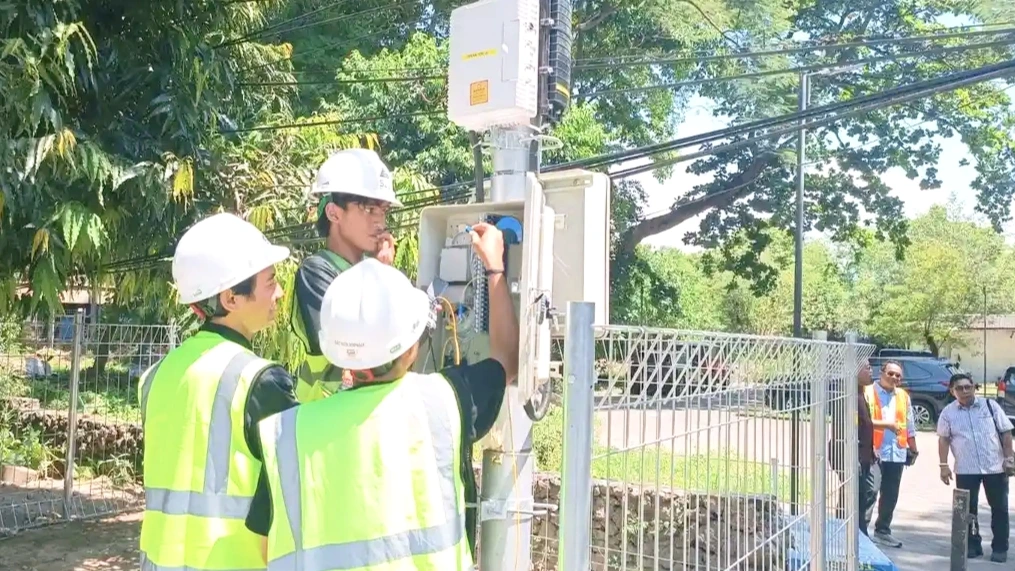
DENPASAR, DEWATA.NEWS – Denpasar is advancing its underground cable infrastructure project as part of efforts to organize telecommunications networks and improve urban aesthetics, starting with the Sanur area.
The city-owned enterprise Perumda Bhukti Praja Sewakadharma (BPS) is finalizing operational plans for the Integrated Utility Network Facility (SJUT-IPT), which aims to relocate overhead provider cables into a shared underground system.
The physical construction along Jalan Danau Tamblingan in Sanur has been completed, and authorities are now coordinating with telecommunications providers to align on technical and regulatory aspects.
“We have invited all providers to discuss technical and regulatory details so the implementation can run smoothly,” said BPS Director I Nyoman Putrawan on Saturday (May 2).
The meetings, which began earlier in the week, involve both local operators and representatives from national-level providers. Some have also conducted on-site visits to assess field conditions in Sanur.
Following these discussions, providers are expected to sign cooperation agreements before full implementation begins.
The project operates under a shared-cost model, where expenses are distributed among participating providers.
“The more providers that join, the lower the rental cost for each. That’s why we encourage all operators, including those previously unregistered, to participate,” Putrawan explained.
Currently, around 60 providers are officially registered in Denpasar, although authorities believe the actual number may be higher due to past moratorium conditions.
The city is also preparing a mayoral regulation to define tariffs, expected to be issued in May. This will be followed by a separate regulation outlining sanctions for providers that do not comply.
Under the planned rules, providers will be given up to three months to transition their cables into the underground system, followed by an additional month to dismantle existing infrastructure.
“If providers do not comply, monitoring teams will take action, and sanctions will be applied once the regulation is in effect,” he added.
Tariff calculations will be based on location categories. Sanur is classified as a primary zone, while other areas fall into a secondary category with adjusted rates.
The SJUT system in Sanur has a capacity of 1,440 cores and spans approximately 3 kilometers. After the initial rollout on Jalan Danau Tamblingan, expansion is planned for Jalan Danau Poso and other parts of the city.
The initiative is part of Denpasar’s broader effort to modernize infrastructure, reduce visual clutter from overhead cables, and support sustainable urban development.