
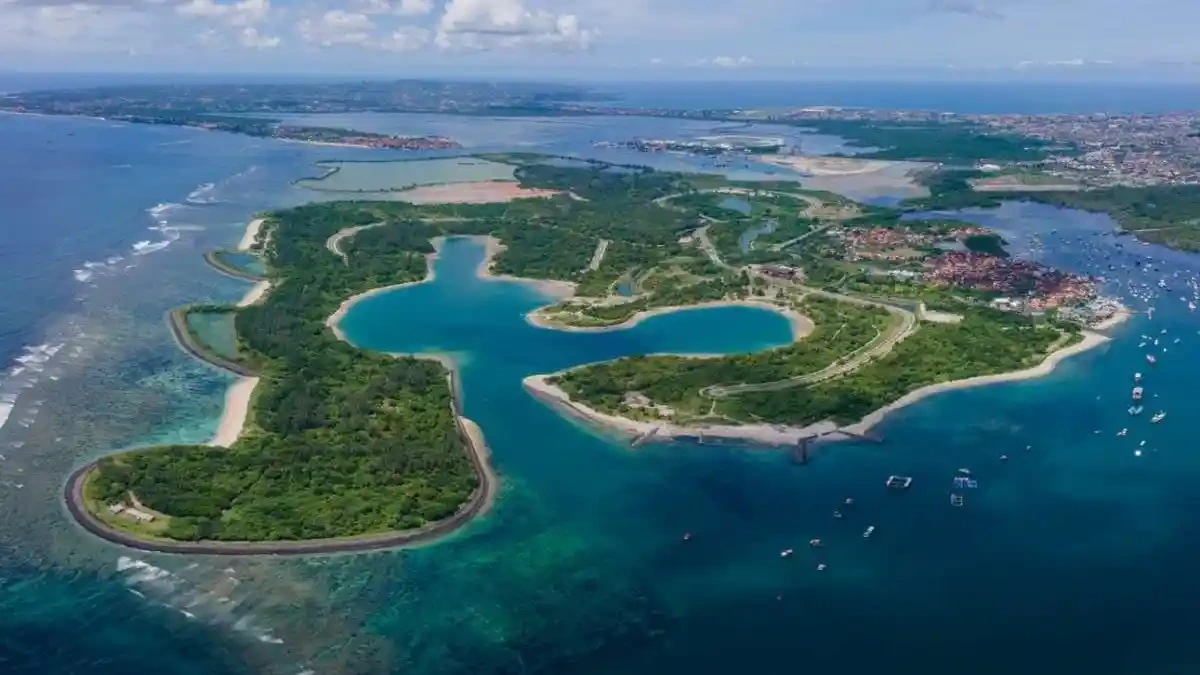
DENPASAR, DEWATA.NEWS – Bali lawmakers are preparing an official recommendation to permanently stop several development activities within the Kura-Kura Bali Special Economic Zone (KEK) project on Serangan Island, following mounting concerns over land permits, mangrove forest exchanges, and coastal development procedures.
The recommendation is being finalized by the Bali Regional House of Representatives’ Special Committee on Spatial Planning, Assets, and Licensing (Pansus TRAP) and is expected to be submitted to the Bali Provincial Government next week.
The move follows a public hearing held on Monday, May 11, 2026, which lawmakers said ended without sufficient clarification from PT Bali Turtle Island Development (BTID), the company behind the Kura-Kura Bali project.
According to Pansus TRAP Chairman I Made Supartha, the committee found indications of what it described as systematic irregularities related to land conversion, mangrove forest exchange processes, and the use of coastal areas on Serangan Island.
“There will be no more hearings. We are moving directly to recommendations. Many issues are indicated to be problematic, from land conversion and forest exchange procedures to mangrove and coastal matters,” Supartha said on Wednesday, May 13, 2026.
The proposed recommendation will reportedly include a full evaluation of marina facilities and beach area utilization within the Special Economic Zone.
Supartha stressed that the KEK designation does not exempt developers from complying with environmental and legal regulations.
“A Special Economic Zone is not a law-free zone. All regulations still apply,” he said.
Beyond environmental concerns, lawmakers also criticized what they described as the privatization of coastal access on Serangan Island. The committee argued that public access to certain beach areas has become increasingly restricted due to ongoing development activities.
“The beach belongs to the public. If areas are closed off or community access is disrupted, it must be restored,” Supartha added.
The committee also revisited past administrative processes tied to the project, including unresolved land occupation issues involving 172 residents in 2012. Lawmakers questioned the legality of settlements reportedly handled through developer-issued statements without formal relocation mechanisms or official compensation procedures.
“There should have been a formal settlement process, not merely statement letters,” Supartha said, referring to the unclear release of land rights.
During its investigation, the committee also identified alleged administrative irregularities linked to historical forest land exchange approvals involving Bali’s regional forestry authorities. Lawmakers suspect that replacement land verification may have been conducted only administratively without detailed technical forestry assessments.
Supartha warned that tighter oversight is necessary to prevent larger environmental and social impacts on Serangan Island in the future.
“If this is not addressed now, one day people may suddenly find a massive mall and other large buildings standing there. This concerns the environment, social issues, culture, and the rights of Balinese communities,” he said.
As of Wednesday, PT BTID had reportedly not completed several key documents requested by the committee. Lawmakers stated that the findings could potentially be forwarded to law enforcement authorities if criminal elements are later identified.