
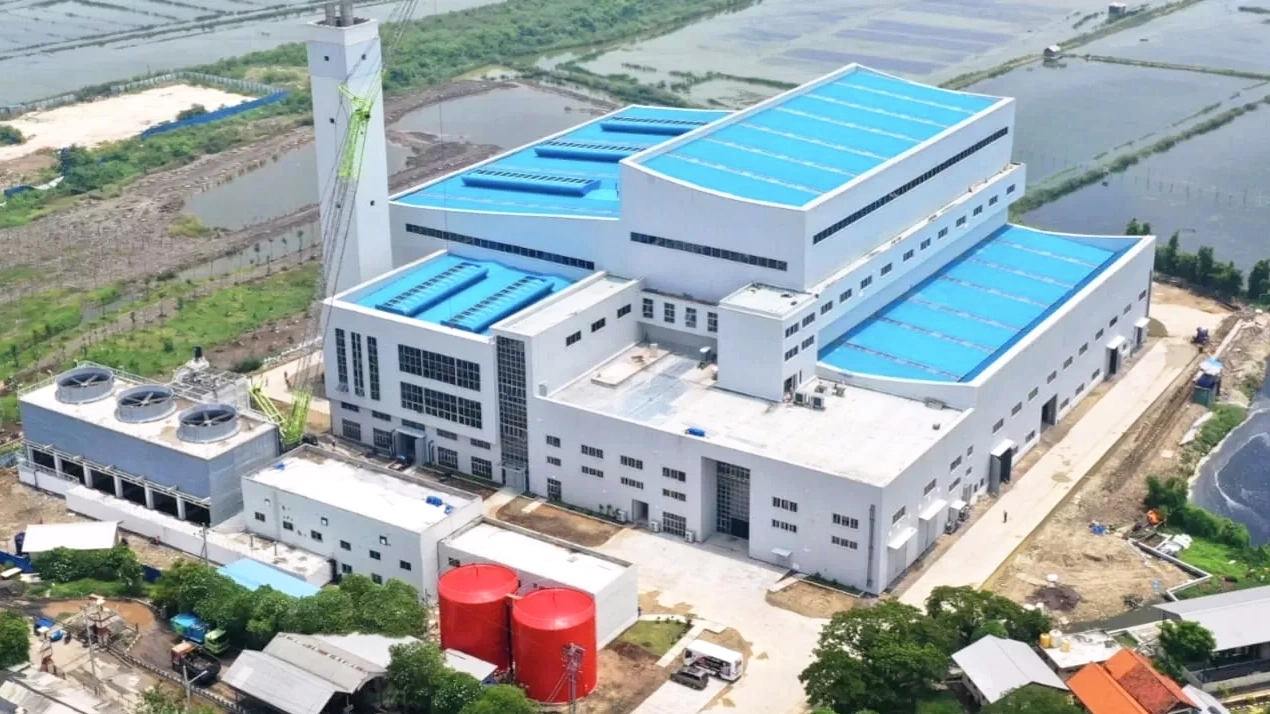
DENPASAR, DEWATA.NEWS – Indonesia’s sovereign investment agency has announced a strategic partner to develop a waste-to-energy facility in Denpasar, a project aimed at addressing Bali’s growing waste challenges while generating electricity.
The Indonesia Investment Authority’s investment arm, Badan Pengelola Investasi (BPI) Danantara, confirmed in March 2026 that Zhejiang Weiming Environment Protection Co., Ltd. will serve as the operator for the Waste-to-Energy (WtE) project in Denpasar.
The announcement forms part of the implementation of Presidential Regulation No. 109/2025, which focuses on strengthening urban waste management, reducing pressure on landfill sites, and supporting sustainable energy development.
Zhejiang Weiming was selected following a competitive process involving more than 200 international companies with experience in waste management and energy infrastructure.
Danantara Chief Investment Officer Pandu Sjahrir said the selection of an experienced operator is essential to ensure the facility operates under high standards of safety, operational reliability, and accountability.
“The selected operator is expected to maintain consistent operational performance, comply with all applicable regulations, and build sustainable engagement with the local community,” Pandu said.
Under the project structure, the operator will also be required to form a consortium with regional government-owned enterprises and local companies to support technology transfer and strengthen domestic industry participation.
Zhejiang Weiming, headquartered in Wenzhou, China, is known for integrating the entire waste management value chain, including investment, project design, and equipment manufacturing.
For the Bali project, the company has established the Weiming Nusantara Energy Alliance Consortium to lead investment and provide incineration technology.
One of the key technologies planned for the facility is the HWM Double Tiers to-and-fro Furnace Grate, which is designed to process household waste with high moisture content and low calorific value—characteristics commonly found in tropical regions such as Indonesia.
The Denpasar waste-to-energy facility is expected to process up to 1,500 tons of waste per day.
The planned location is near the Suwung landfill area, which has long exceeded its capacity and has become one of the island’s most pressing environmental challenges.
In addition to reducing landfill waste, the project is projected to generate between 20 and 35 megawatts of electricity that will be supplied to Indonesia’s national electricity grid.
According to the project timeline, the process will move to the signing of cooperation agreements and completion of environmental impact assessments between April and May 2026.
Groundbreaking for the facility is targeted for June 2026.
Construction is expected to take approximately two years, with the plant projected to begin full operations by the end of 2028, serving the Sarbagita metropolitan area, which includes Denpasar, Badung, Gianyar, and Tabanan.