
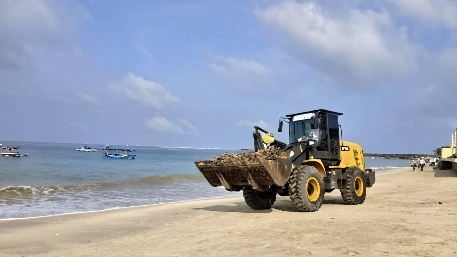
BADUNG, DEWATA.NEWS – Members of Pandawara Group raised concerns over the high volume of styrofoam and plastic waste found along Kelan Beach in Kuta during a cleanup activity on Wednesday (February 18, 2026).
Gilang Rahma, one of the group’s members, said that approximately 90 percent of the collected waste consisted of small pieces of styrofoam and plastic, including microplastic particles that are difficult to detect.
He emphasized that plastic waste poses a greater long-term threat to marine ecosystems compared to organic waste.
“Organic waste, even if abundant, does not have as severe an impact as inorganic waste,” Gilang said during the joint cleanup organized by InJourney Group PT Aviasi Pariwisata Indonesia in collaboration with Pandawara Group.
He noted that as one of Indonesia’s priority tourism destinations, Bali must prioritize environmental preservation and ecosystem balance. Gilang called for broader collaboration in addressing waste management challenges.
“Relevant institutions should expand waste processing facilities. When individuals, private sectors, and government work together, the waste problem can be resolved,” he said.
Gilang also pointed out that Indonesia’s large population contributes to the high volume of waste generated nationwide. According to him, population size directly correlates with consumption levels and the amount of waste produced.
“With the diversity and large population in our country, managing tourist areas and handling waste across Indonesia requires greater effort,” he explained.
He compared Indonesia’s situation with several developed countries, which he said tend to have more advanced waste management systems. However, he added that those countries often generate fewer products overall.
“It is important to note that those countries produce far fewer products than we do. As a result, Indonesia inevitably generates more waste,” Gilang said.
The cleanup initiative underscores ongoing concerns about plastic pollution in coastal tourism areas and the need for sustained, collaborative waste management efforts in Bali.