
DENPASAR, DEWATA.NEWS – The Bali Provincial Government is tightening oversight of the road transport sector as mobility among residents and tourists continues to increase across the island.
In addition to reorganizing classifications of transport modes, the Bali Transportation Agency (Dishub) is monitoring thousands of taxi units and mapping traffic congestion points along major roads and intersections.
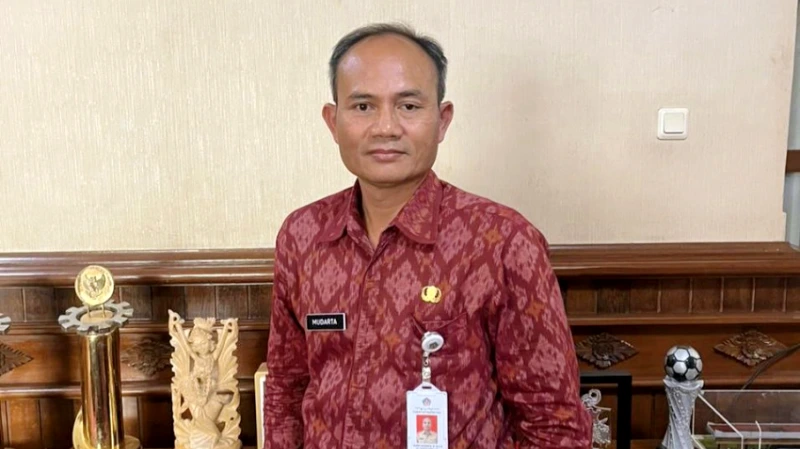
Head of the Bali Transportation Agency, I Kadek Mudarta, explained that road transport is broadly divided into two categories: goods transport and passenger transport. Passenger transport operations refer to Law No. 22 of 2009 on Road Traffic and Transportation.
“Passenger transport consists of route-based services and non-route services,” Mudarta said on Thursday (Feb 26, 2026).
Route-based services include interprovincial buses (AKAP), intraprovincial buses (AKDP), urban transport, and rural transport. Non-route services include taxis, charter services for specific purposes, tourism transport, and transport within designated areas.
Mudarta added that transport authority is divided among the central government, provincial government, and regency or city administrations. For the Bali Provincial Government, jurisdiction covers four types of services: intraprovincial transport (AKDP), taxis, special rental transport (ASK), and intraprovincial shuttle services (AJDP).
The agency has also identified recurring congestion in urban areas, tourism destinations, airport corridors, and major activity centers.
Roads frequently experiencing heavy traffic include Jalan Hang Tuah, Jalan Teuku Umar, Jalan Imam Bonjol, Jalan Raya Kuta, Jalan Raya Kerobokan, Jalan Raya Cokroaminoto, Jalan Jimbaran–Uluwatu, Jalan WR Supratman, Jalan Gatot Subroto Tengah, Jalan Gatot Subroto Barat, Jalan By Pass Ngurah Rai, and Jalan Mahendradatta.
Strategic intersections identified as congestion points include the KFC Sanur intersection, Teuku Umar–Imam Bonjol intersection, Tuban–Airport intersection, Jimbaran–Uluwatu intersection, and By Pass Ngurah Rai–Pesanggaran intersection.
To monitor traffic conditions, Dishub operates an Area Traffic Control System (ATCS) at 13 points along Jalan By Pass Ngurah Rai, as well as at the Patung Kuda intersection, which serves as a main access route to I Gusti Ngurah Rai International Airport. Monitoring is supported by field officers and coordination with regency and city governments as well as the police.
“Technical traffic evaluations are conducted periodically through surveys and studies at priority roads and intersections as the basis for traffic management and engineering measures,” Mudarta stated.
Regarding taxi operations, seven licensed companies currently operate in Bali: PT Praja Bali Transportasi, Koperasi Jasa Angkutan Taxi Ngurah Rai, Koperasi Komotra Bali, Koperasi Wisata Nusa Dua Bali, Koperasi Wahana Dharma Organda Bali, Koperasi Taxi Jimbaran, and Koperasi Bunga Bali.
Based on previously issued monitoring cards (Kartu Pengawasan/KP), approximately 3,500 taxi vehicles are registered to operate on the island.
As part of administrative supervision, the Transportation Agency is conducting data collection and evaluating taxi company governance to ensure regulatory compliance. Authorities expect these measures to improve safety, professionalism, and overall transport management amid high traffic activity across Bali.