
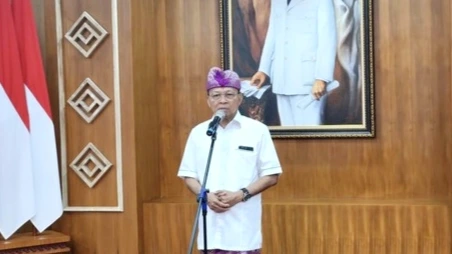
DENPASAR, DEWATA.NEWS – The Bali Provincial Government is targeting IDR 500 billion in revenue from its foreign tourist levy program in 2026 as international visitor arrivals continue to recover across the island.
Bali Governor Wayan Koster said the target has officially been included in the province’s regional budget revenue projections for the year.
“This year the target is IDR 500 billion, which has been included in the regional budget revenue. As of May 11, around IDR 114 billion has been collected. Hopefully this will continue increasing going forward,” Koster said at Jayasabha in Denpasar on Saturday, May 16, 2026.
The foreign tourist levy, officially introduced on February 14, 2024, requires international visitors entering Bali to pay a tourism contribution fee aimed at supporting cultural preservation and sustainable tourism programs.
According to provincial government data, approximately 2.1 million foreign tourists paid the levy between February 14 and December 31, 2024, generating around IDR 318 billion in revenue.
During the same period, Bali recorded roughly 6.3 million international arrivals, meaning about 32 percent of foreign visitors completed the payment requirement.
In 2025, the number of paying visitors reportedly increased to approximately 2.4 million tourists out of around 7 million international arrivals.
“The total foreign tourist levy collected reached IDR 369 billion. Compared to 2024, it increased from IDR 318 billion to IDR 369 billion,” Koster explained.
The governor also highlighted what he described as strong compliance among foreign tourists, noting that most payments are made before visitors arrive in Bali.
According to Koster, around 96 percent of tourists complete payment online prior to departure.
The levy system is processed digitally through Bank Pembangunan Daerah (BPD) Bali, with funds allocated for cultural preservation, environmental protection, infrastructure development, and tourism destination improvements across the island.
Provincial authorities said the management of the funds is also subject to audit by Indonesia’s State Audit Agency (BPK).
Despite the increasing revenue, Koster acknowledged that technical challenges remain, particularly regarding the digital network capacity of BPD Bali’s payment system.
“I know BPD’s digital telecommunications network is still weak. But for now, we continue with the system,” he said.
The Bali foreign tourist levy program remains one of the provincial government’s key policies aimed at supporting sustainable tourism and funding long-term cultural and environmental initiatives on the island.