
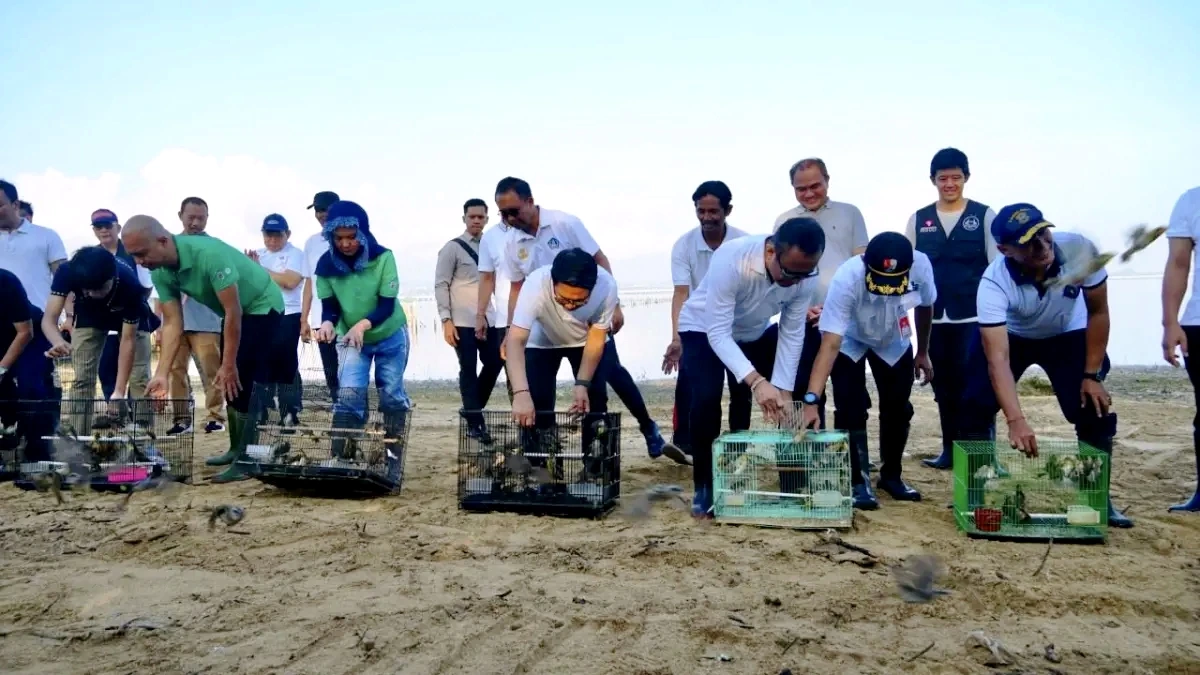
BADUNG, DEWATA.NEWS – Bali officials and law enforcement representatives gathered for a large-scale environmental action at Tahura Ngurah Rai forest park on Saturday (April 25), focusing on mangrove planting and bird release as part of a coastal conservation initiative.
The activity, themed “Green Collaboration: Preserving Mangroves for the Earth,” was initiated by the Bali High Prosecutor’s Office (Kejati Bali) and brought together cross-sector stakeholders to support ecosystem protection in one of Bali’s key coastal areas.
Bali High Prosecutor Chatarina Muliana Girsang said the initiative reflects a shared responsibility to protect the environment, particularly in safeguarding coastal ecosystems that play a vital role in sustaining biodiversity and mitigating climate impacts.
“Mangroves function as natural coastal barriers against abrasion, waves, and seawater intrusion. They are also critical habitats for various species and have a strong capacity to absorb and store carbon,” she said.
She added that the Tahura Ngurah Rai mangrove area in Benoa is one of Bali’s most important coastal ecosystems, serving as both a biodiversity hub and a “green lung” for environmental balance.
Badung Regent I Wayan Adi Arnawa, who attended the event, expressed appreciation for the initiative led by the Attorney General’s Office, describing it as a concrete step in climate mitigation efforts.
“This activity reflects a joint commitment to preserving coastal ecosystems while strengthening collaboration across sectors to address climate change and protect mangroves for future generations,” he said.
The event was also attended by Bali Governor Wayan Koster, Denpasar Mayor I Gusti Ngurah Jaya Negara, and members of the regional leadership coordination forum (Forkopimda), along with representatives from environmental agencies and state-owned enterprises.
In addition to planting mangroves, participants released birds as a symbolic gesture of environmental restoration and sustainability.
The initiative highlights ongoing efforts in Bali to balance development with environmental protection, particularly in coastal zones that are critical for both tourism and ecological resilience.