
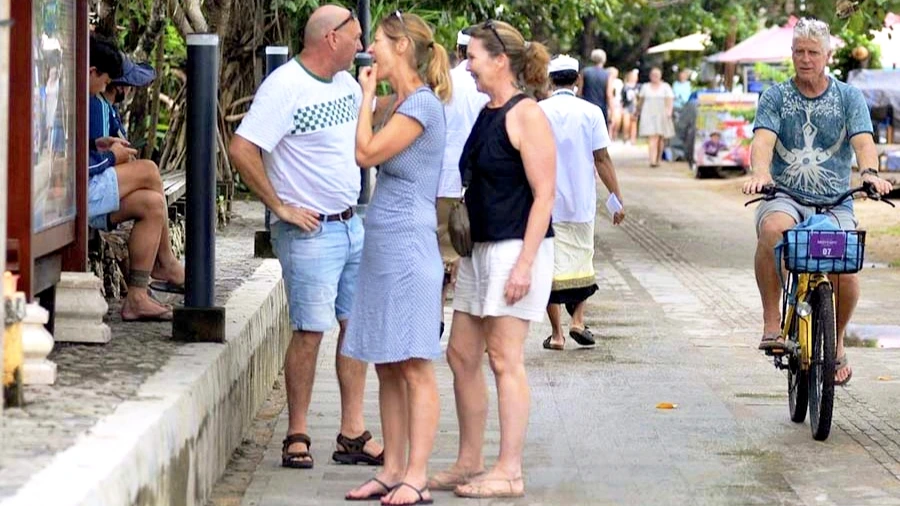
DENPASAR, DEWATA.NEWS – The weakening Indonesian rupiah, which has fallen beyond IDR 17,600 against the US dollar, is being viewed by some economists as a potential economic advantage for Bali’s tourism-driven economy.
Economic and Business Lecturer at Mahendradatta University, I Putu Parwata, said the strengthening US dollar could create new growth opportunities for Bali, particularly in regions heavily dependent on international tourism such as Badung Regency.
Speaking on Monday, May 18, 2026, Parwata explained that the current currency situation should not only be seen as an economic threat but also as an opportunity if managed through effective local economic strategies.
“Everyone coming from overseas to Bali brings dollars with higher value. Tourism-based regions like Bali, especially Badung, will benefit greatly. When the dollar rises, regional income and economic growth can also increase,” Parwata said.
According to him, the stronger dollar increases the purchasing power of foreign tourists visiting Bali, potentially boosting spending across hotels, restaurants, villas, transportation services, and local businesses.
However, Parwata also warned that both local and central governments must remain cautious and implement tactical microeconomic policies to maximize the opportunity while maintaining economic stability.
He encouraged tourism businesses to improve operational efficiency without reducing service quality.
“Tourism businesses need to reduce operational costs without lowering quality. Cost efficiency can significantly increase profit opportunities,” he explained.
Parwata also urged Bali’s regional government, particularly agencies overseeing cooperatives and small businesses, to provide stimulus programs supporting local creative industries, hotels, restaurants, and villas in refreshing and upgrading their products.
He emphasized the importance of intensifying international tourism promotion through digital platforms to attract more visitors using stronger foreign currencies.
“Bali tourism must provide high-quality services so tourist spending during their stay increases, which will eventually strengthen regional revenue,” he said.
Beyond the tourism industry, Parwata highlighted the need for greater financial efficiency at the household level and improved workforce skills within Bali’s tourism sector to remain globally competitive.
On the macroeconomic side, he also called for stronger export promotion of Bali-based products rooted in local culture and craftsmanship.
“Exports of Bali’s industries must be strengthened. Products such as woven fabrics, endek textiles, paintings, and other tourism-related products should be pushed into international markets,” he added.
Parwata believes Bali can turn global economic uncertainty into regional economic momentum through a combination of quality tourism, stronger local small businesses, digital economy utilization, and adaptive agricultural development.
“There is no need to panic. We should maximize Bali’s position as a tourism region so we can gain the greatest benefit from the rising dollar,” he concluded.