
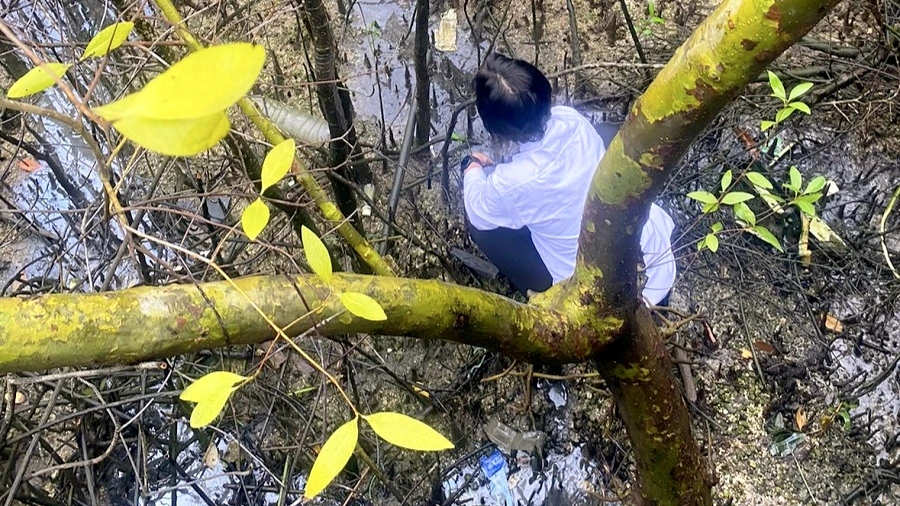
DENPASAR, DEWATA.NEWS – The mangrove ecosystem in the Ngurah Rai Forest Park (Tahura Ngurah Rai) area in South Bali has been declared in an ecological emergency condition after hundreds of mangrove trees were found dead in Benoa.
The affected area is located west of the entrance to the Bali Mandara Toll Road. The mass die-off was reported in February 2026.
The findings are based on research conducted by a team from Udayana University through its Agricultural Hospital unit, led by Dr. Dewa Gede Wiryangga Selangga. The team conducted on-site plant disease diagnostics on Monday (Feb 23) after observing large numbers of trees dying within a single vegetation block.
Field assessments identified symptoms consistent with abiotic stress, including chlorosis (yellowing leaves), necrosis (browning), peeling bark, stunted growth, blackened root rot, and leaf thickening (succulence).
“No pathogenic infection was found. Strong indications point toward heavy metal poisoning and hydrocarbon (oil) compounds,” Dewa Gede Wiryangga Selangga said on Wednesday (Feb 25).
The affected mangrove zone is crossed by a fuel distribution pipeline operated by Pertamina Patra Niaga. According to coordination data, maintenance work was conducted along the distribution route from Benoa Port to the Pertamina depot in Pesanggaran between September and November 2025.
The research team suspects that oil seepage may have entered the mangrove substrate and that cleanup efforts were not fully completed. Although a visual inspection on Feb 21, 2026 did not detect an oil layer on the water surface, hydrocarbons in mangrove ecosystems are known to accumulate in sediment.
Oil entering soil pores can block root systems, damage cell membranes, and disrupt nutrient absorption. Aromatic compounds in fuel can cause vegetation death within weeks.
Several mangrove species were reported as affected, including Sonneratia alba (Prapat), with dry and brittle trunks across approximately six are; Rhizophora apiculata (Bakau), with widespread yellowing leaves across approximately 60 are; and Avicennia marina (Api-api), with rotting and dried roots in the western toll road block.
Researchers also noted that reduced water flow following the construction of the Bali Mandara Toll Road may have worsened conditions. Pollutants are suspected to have become trapped near the leakage point instead of dispersing naturally.
The team is currently conducting Gas Chromatography–Mass Spectrometry (GC-MS) analysis to confirm hydrocarbon content in the mangrove rhizosphere. The discrepancy between visual inspection results and the scale of vegetation death has prompted calls for an independent environmental forensic investigation, as underground leaks or corroded pipes may be difficult to detect visually but could have long-term coastal impacts.
The research team recommended several measures, including routine monitoring of mangrove health within protected area management, bioremediation using oil-degrading bacteria, a comprehensive audit of energy infrastructure in South Bali including real-time leak detection systems, and a temporary moratorium on high-risk activities in sensitive zones until environmental impact assessments (AMDAL) are updated.
They also urged rehabilitation of contaminated substrate before replanting mangroves and stricter enforcement of land status within the forest park to ensure conservation functions are not compromised by commercial interests.
Researchers warned that without immediate intervention, the crisis could threaten Bali’s coastal resilience, increase disaster risks, and damage the island’s environmental reputation as a global tourism destination.