
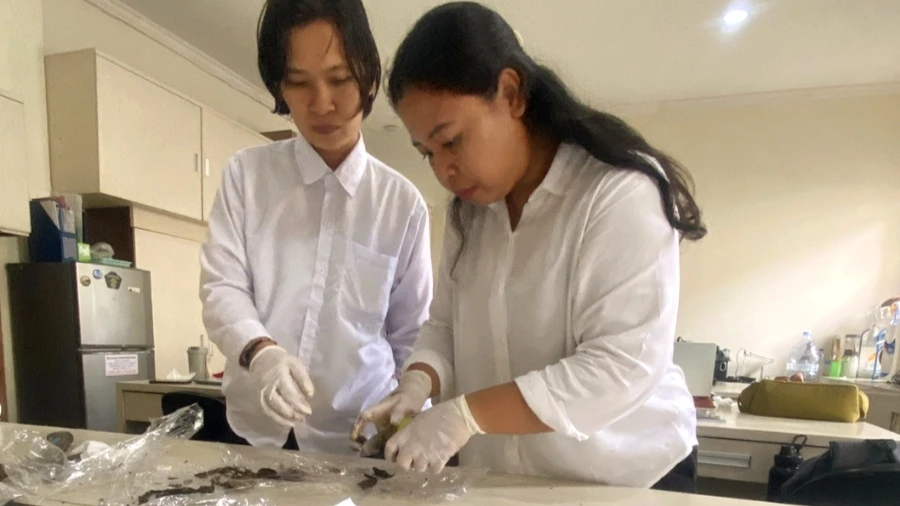
DENPASAR, DEWATA.NEWS – A laboratory analysis conducted by researchers from Udayana University has confirmed that a mass die-off of mangrove trees in South Bali was caused by diesel fuel contamination.
The affected mangrove area is located on land managed by the Harbormaster and Port Authority (KSOP) and PT Pelabuhan Indonesia (Pelindo) in South Bali. Findings were presented by the Agricultural Clinic research team of Udayana University between Wednesday (Feb 25) and Thursday (Feb 26).
Research team coordinator Dr. Dewa Gede Wiryangga Selangga said testing was carried out using the Gas Chromatography–Mass Spectrometry (GC-MS) method on sediment and water samples collected from the mangrove rhizosphere zone.
“The analysis shows that soil samples tested positive for petroleum waste contamination, particularly diesel fuel. The detected hydrocarbon compounds were dominated by carbon chains in the C15–C24 range, which are characteristic of diesel,” he said on Thursday night (Feb 26).
According to the findings, 45 volatile compounds were identified in the soil samples, of which 41 were hydrocarbons commonly found in fuels such as gasoline, kerosene, and diesel.
Among the dominant compounds detected were n-Hexadecane (5.799%), n-Heptadecane (7.651%), Pentadecane 2,6,10-trimethyl (7.277%), Pentadecane 2,6,10,14-tetramethyl (8.677%), and n-Eicosane (5.421%).
In contrast, water samples contained only one hydrocarbon-related compound, squalene, which is not considered an indicator of petroleum contamination. This suggests that oil residues had settled and accumulated in the sediment rather than remaining in surface water.
Visually, affected mangroves showed symptoms of abiotic stress, including chlorosis (yellowing leaves), necrosis, peeling bark, stunted growth, and root rot. The pattern of plant mortality occurred in clustered population blocks rather than sporadically.
Researchers explained that diesel infiltrating soil pores can block root systems and disrupt water and nutrient absorption. Aromatic compounds in fuel are capable of damaging plant cell membranes, leading to death within weeks of exposure.
Based on these findings, the research team recommended several measures, including routine health monitoring of mangroves, particularly in the Ngurah Rai Forest Park (Tahura) area; bioremediation through the isolation and application of oil-degrading bacteria; a comprehensive audit of subsea pipelines and energy infrastructure in South Bali; a temporary moratorium on high-risk activities in sensitive areas until environmental documents are updated; substrate rehabilitation prior to replanting; and stricter land-use control within protected forest zones.
Researchers warned that without swift and firm action, South Bali’s mangrove ecosystem could continue to decline. Mangrove forests play a critical role in protecting coastlines from erosion, supporting marine ecosystems, and sustaining Bali’s image as an environmentally based tourism destination.
“Mangrove protection is not merely a local environmental issue, but also relates to coastal security and resilience against climate change,” Selangga emphasized.